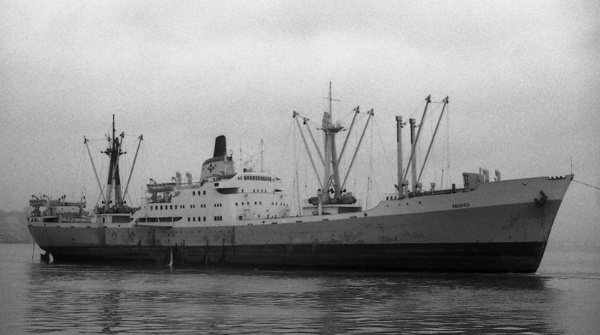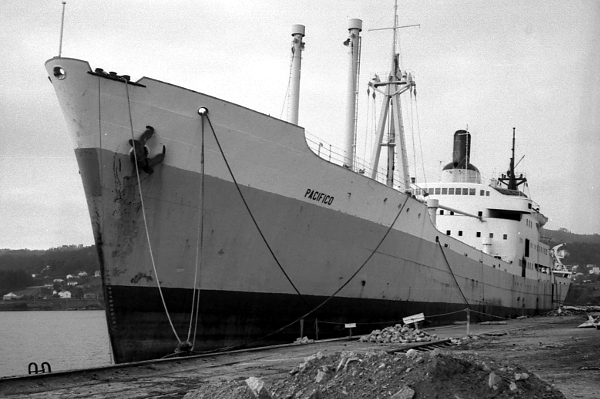
Pacifico
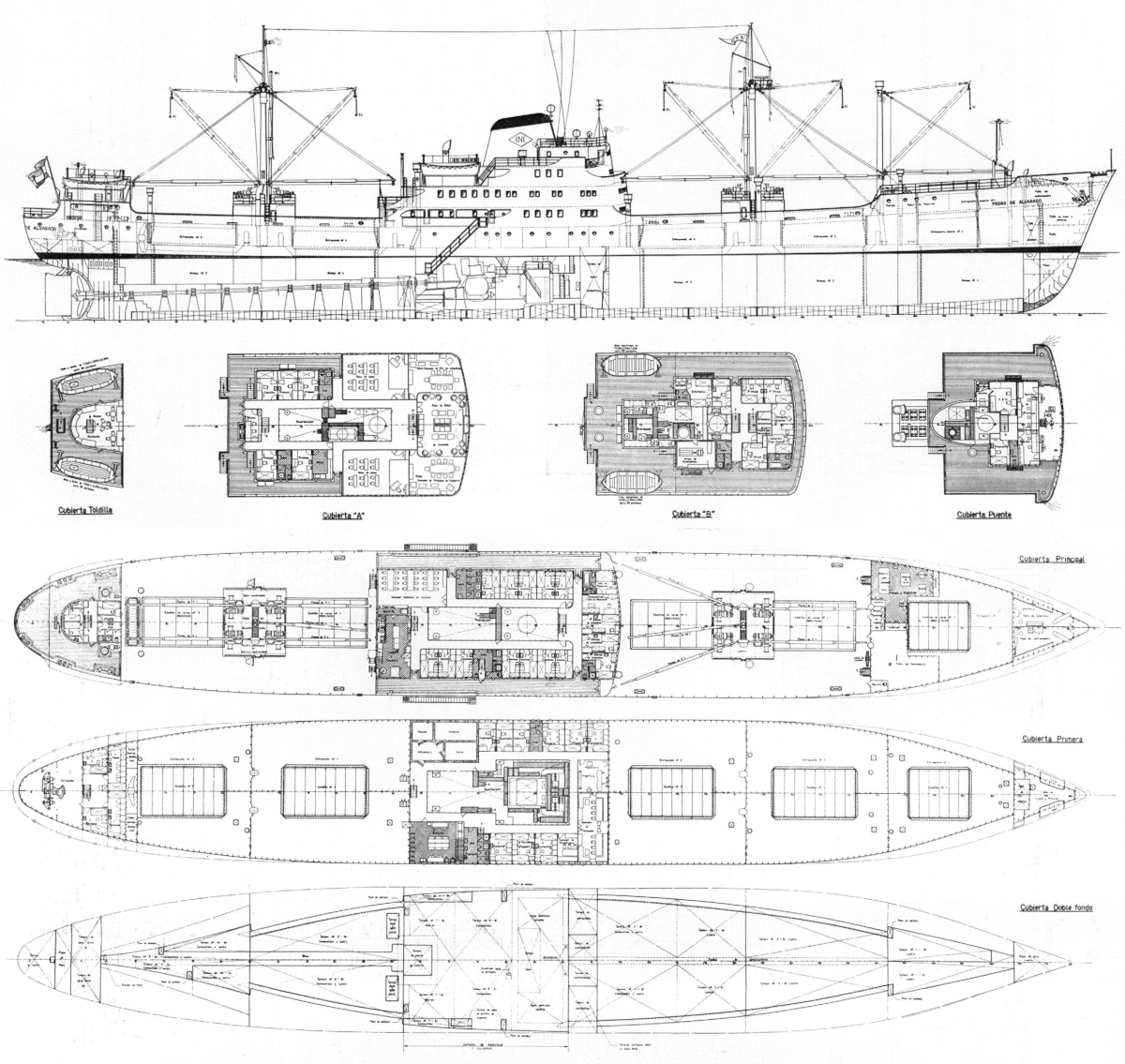
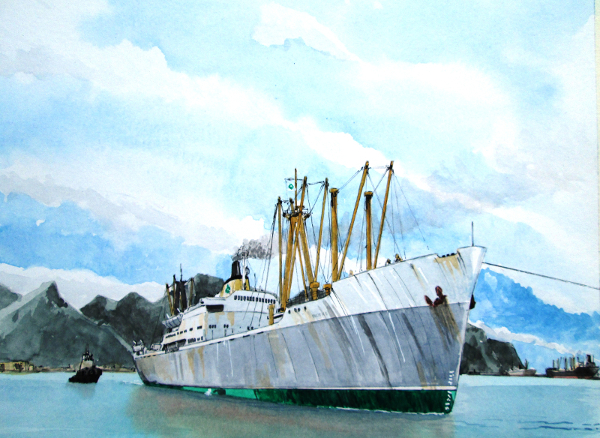
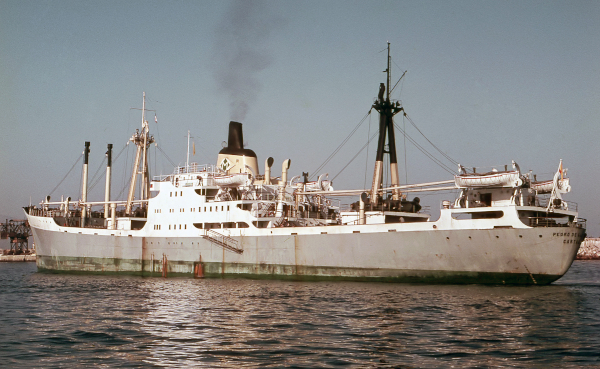
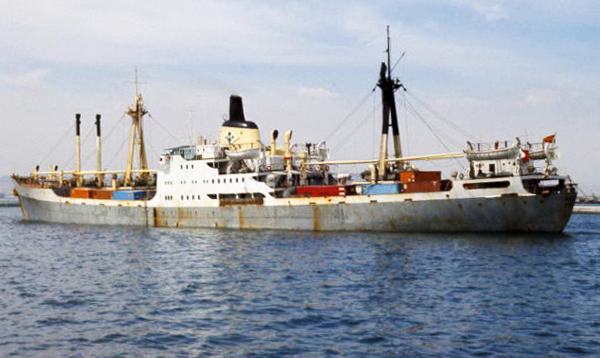
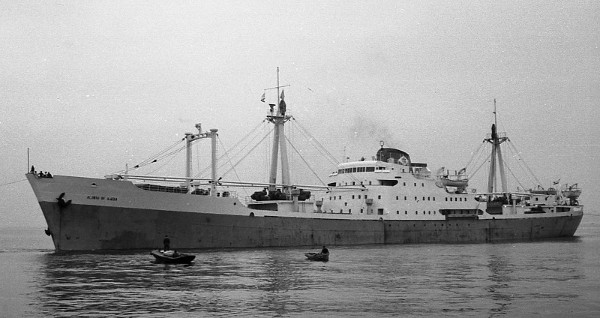
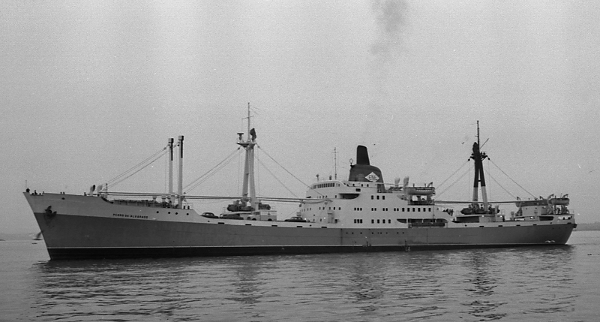
This vessel was built at Cartagena (Spain) by Empresa Nacional Bazán, ordered by Empresa Nacional Elcano, and named Pedro de Alvarado.
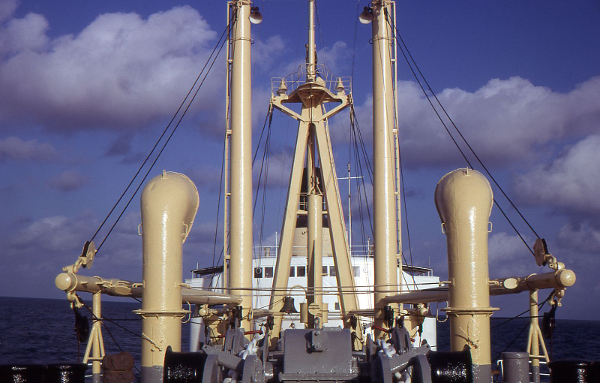
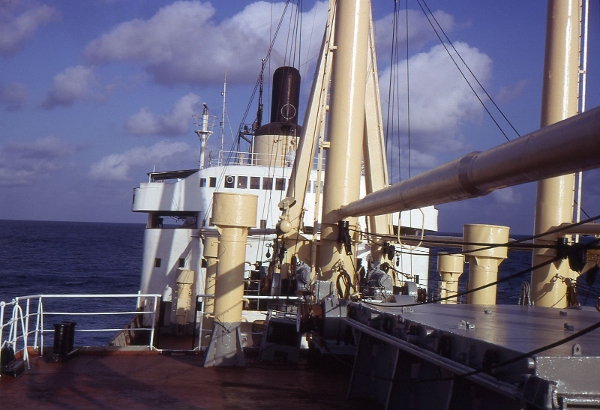
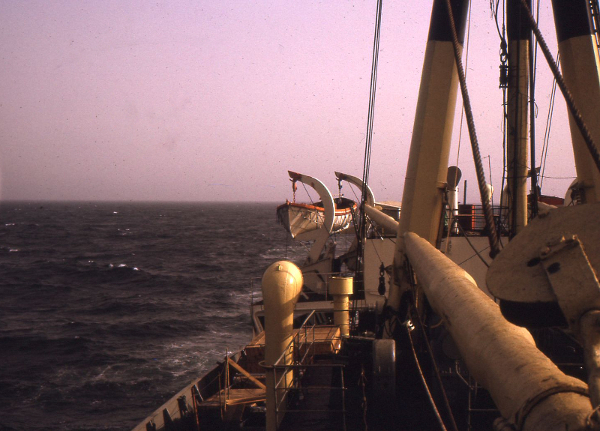
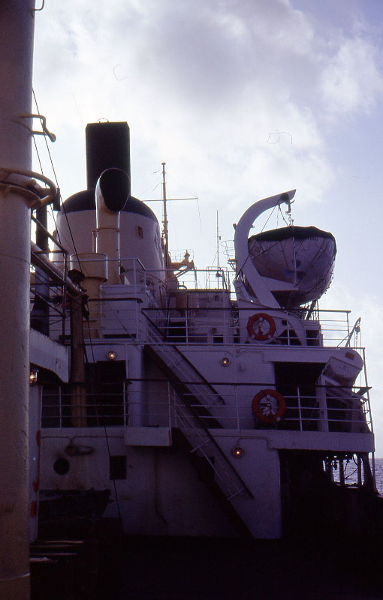
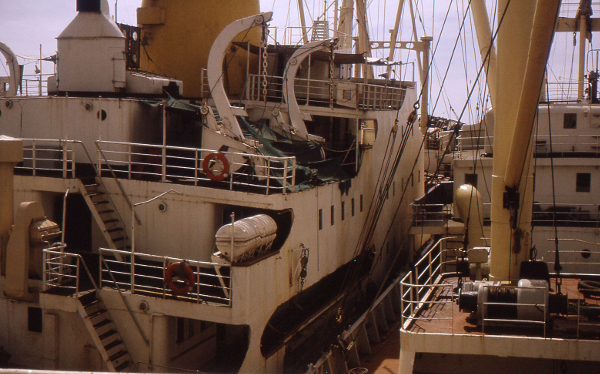
Elcano ordered her as turbine school-ship, due to this the complement was larger than usual. From outside can be seen the many places available in lifeboats.
Her main specifications were:
Length 126.61 mtr Beam 17.22 mtr Depth 10.85 mtr Draft 7.6 mtr
2,444 NRT 5,120 GRT 11,295 MT Displacement 7,571 DWT
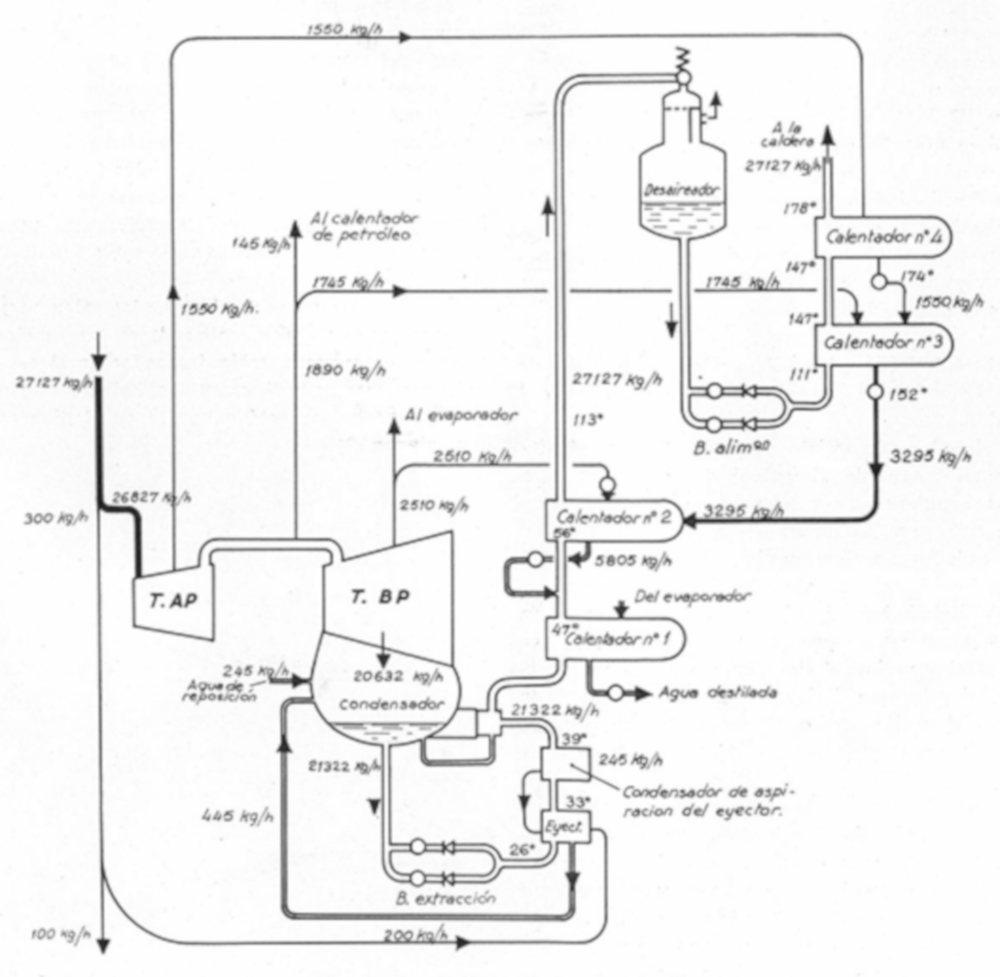
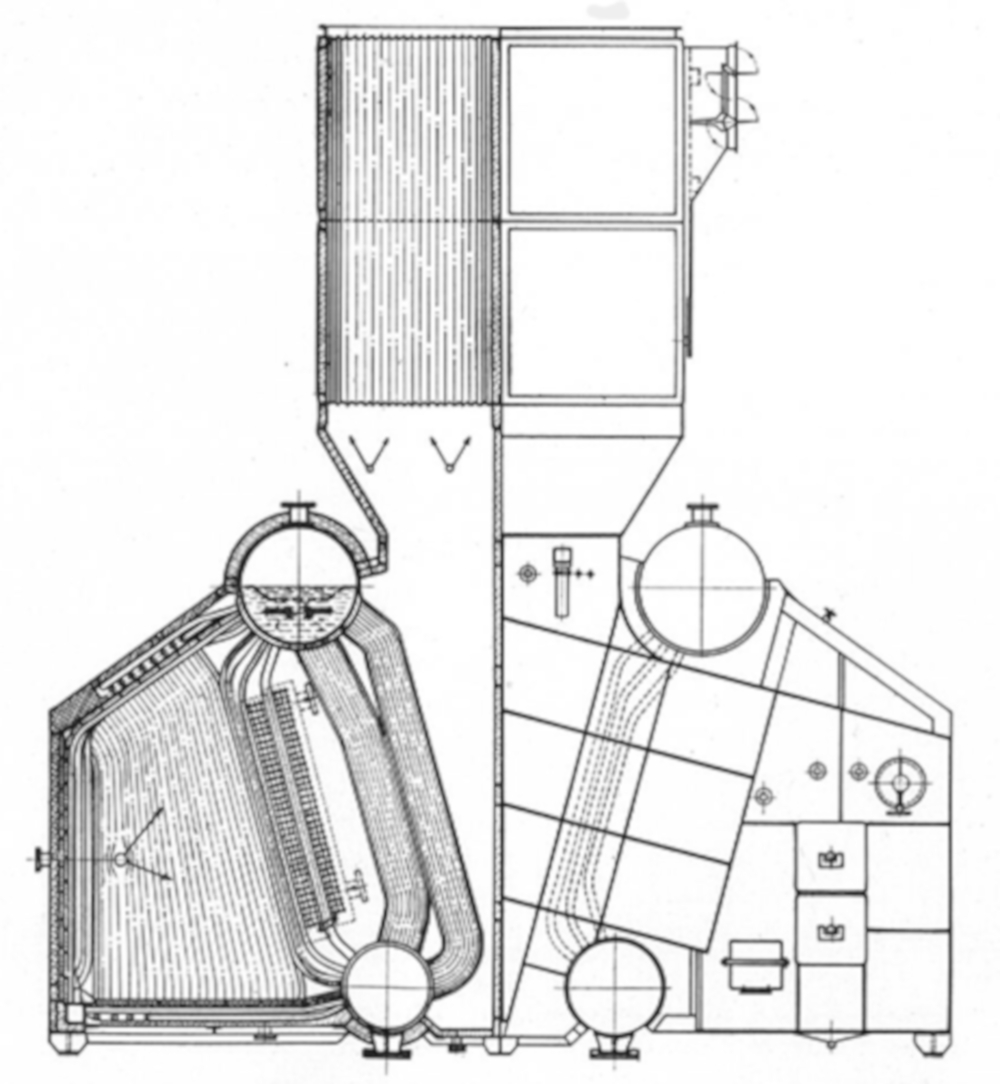
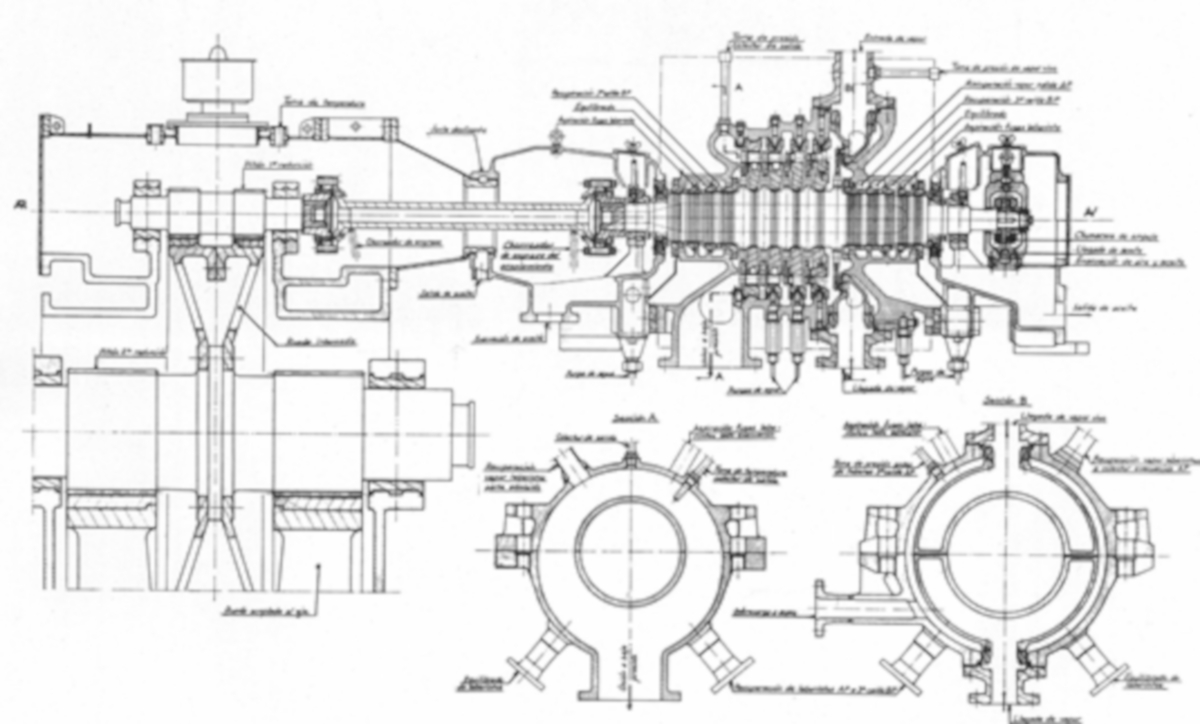
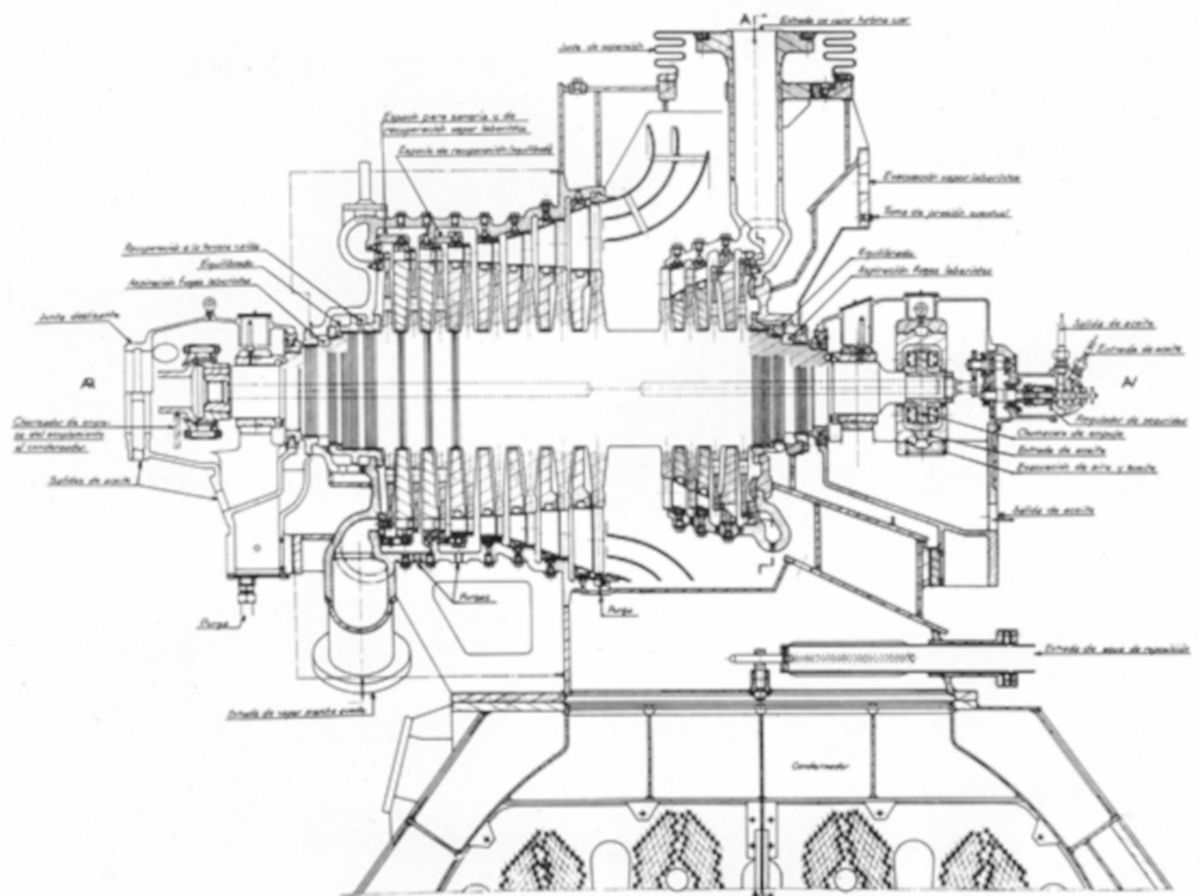
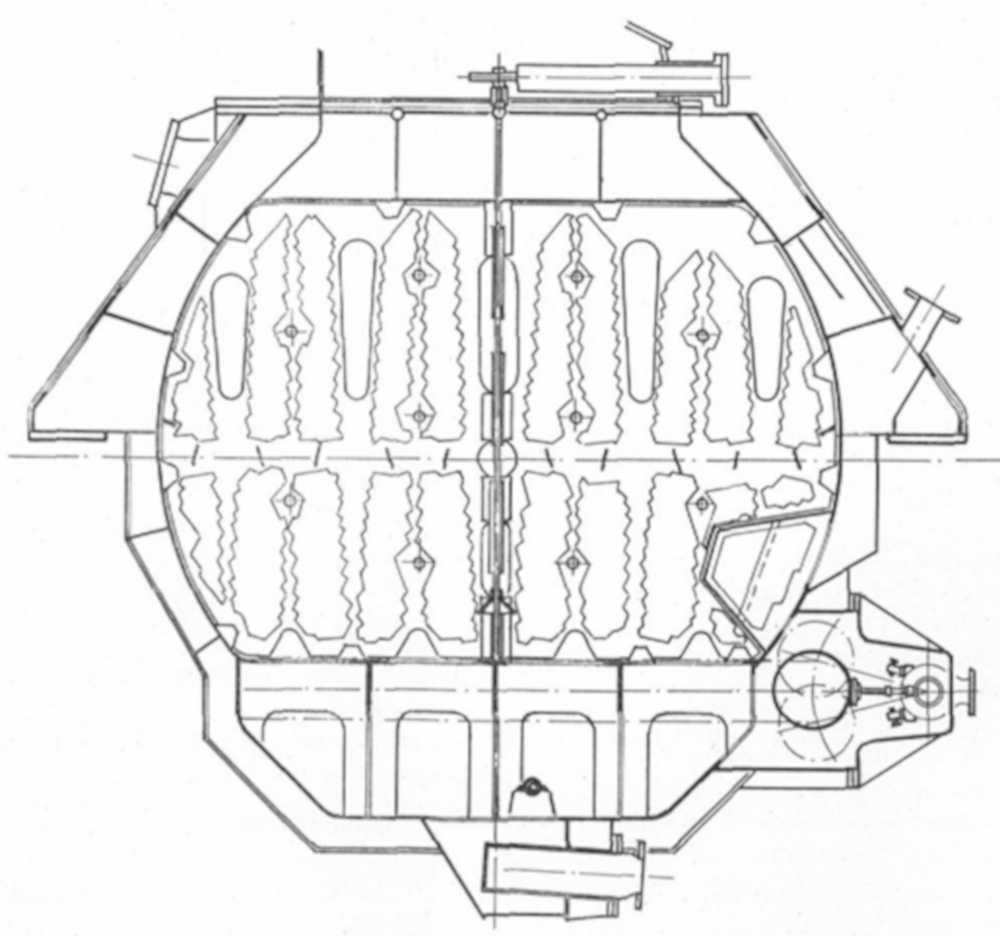
Propulsion: Turbines Rateau with 7,000 SHP
Consumption: 42.7 MT/day gasoil
Bunker capacity: 1,090 MT
Sea trial speed: 17.7 knots
On 1972 was bought by Marasia, which before had had her under charter, and renamed Pacifico.
She was usually sailing to West Coast of South America, but their first trips after bought were to Australia. She was also carrying out some trips to West Africa.
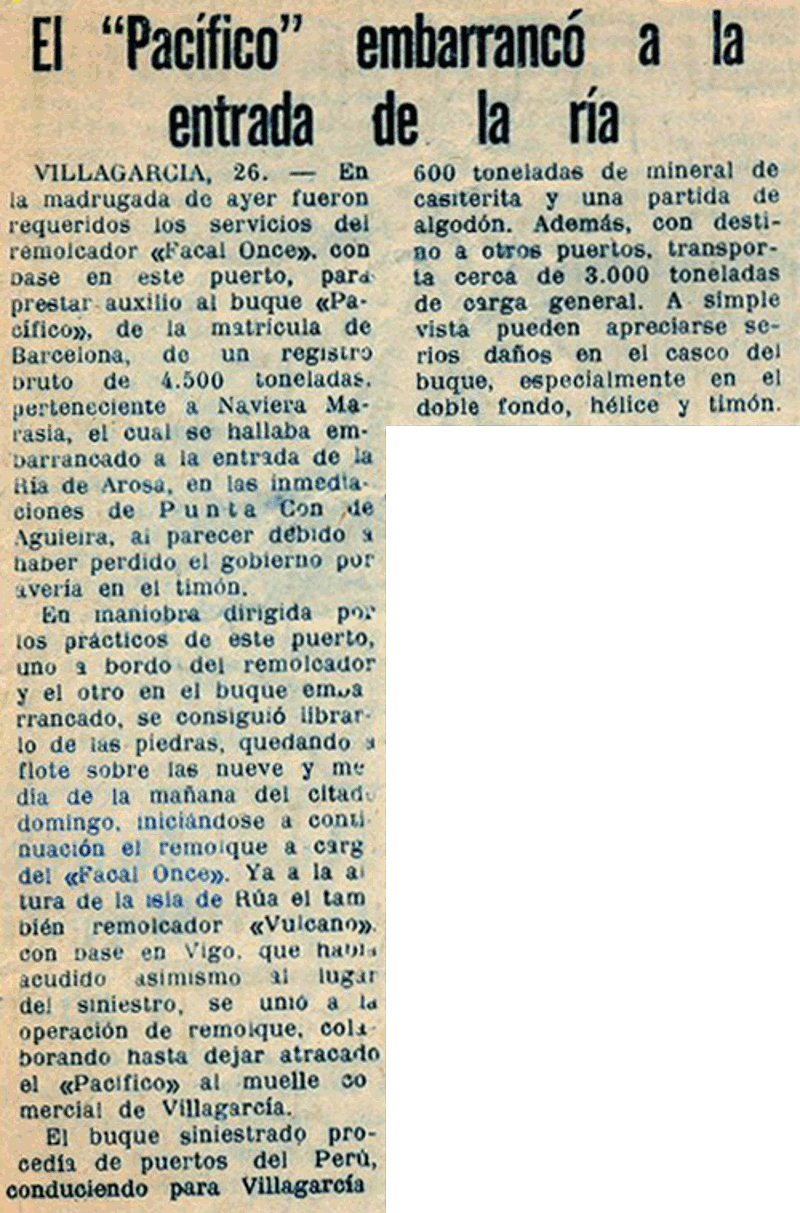
On 25 January 1976 she grounded at Ría de Arosa, when inbound to Villagarcia de Arosa (Spain) in a trip started at Valparaíso (Chile). She was declared constructive total loss, and on 10 February 1976 was towed to Ferrol to be scrapped by F. Mata.
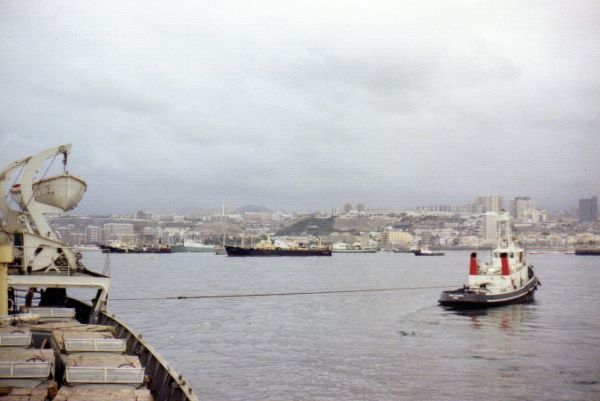
Here she is at Vigo with many Land-Rovers on the main deck. These cars were often transported to South America in the company vessels.
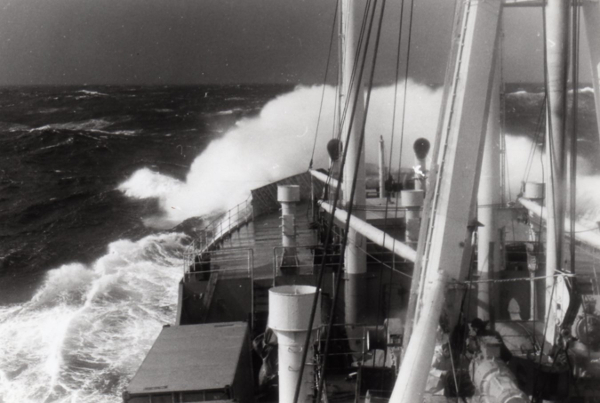
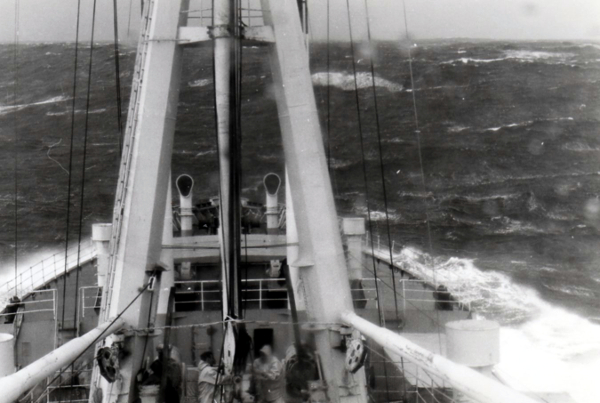
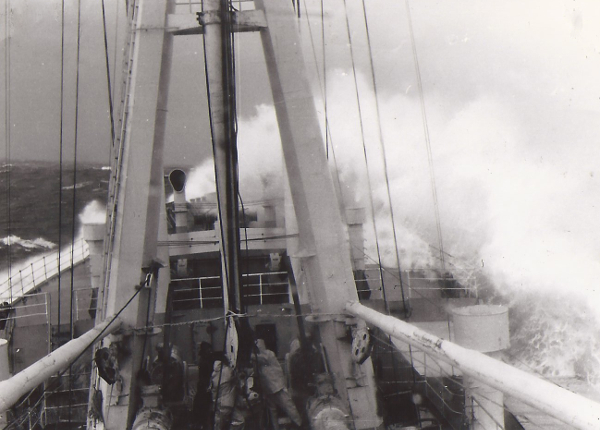
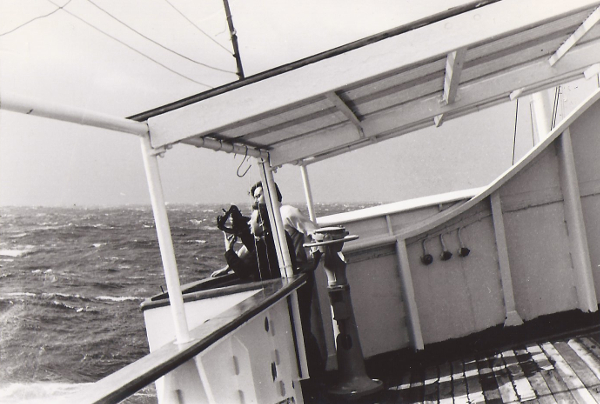
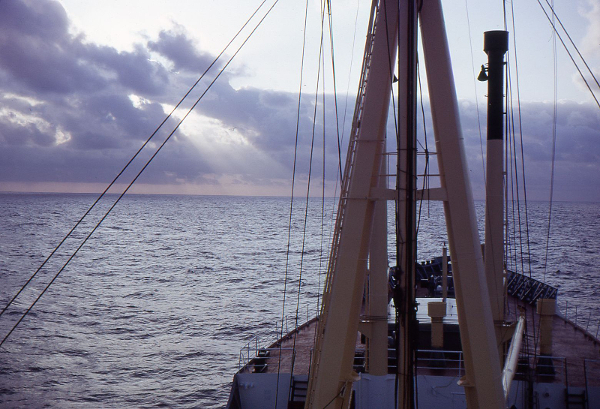
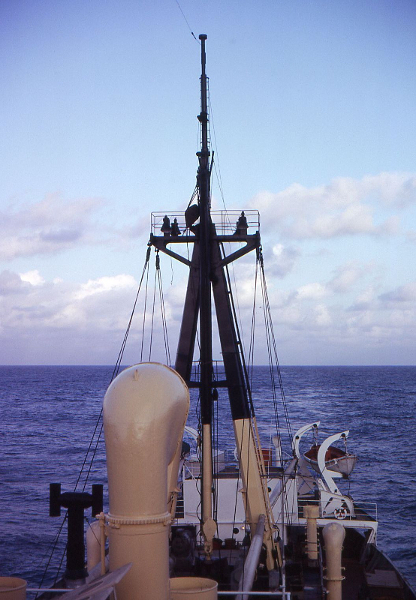
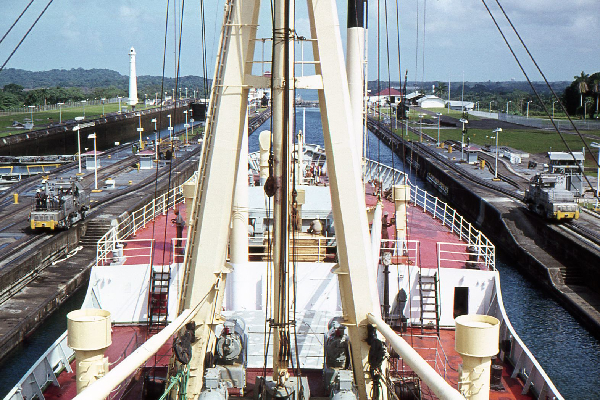
In the second of these two, steaming in rough weather after passing the Strait of Gibraltar, several seafarers can be seen working on deck. Maybe securing the boom that could be loosening.
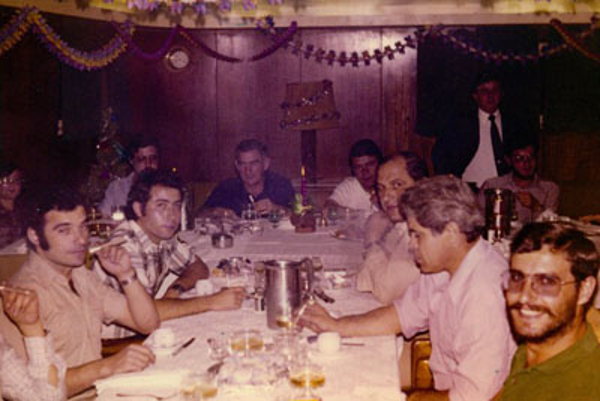
There are always unforgettable moments as the 1975 Christmas. On the left are Paco Sabor Uhía and Miguel Villarejo; on background table Marisa, Roselló, Rufino (Master), Edmundo Redondo Pérez (Chief Engineer), and Francesc Lleal Galcerán; on the right Andrés Vidal Sampedro. The two closer on the right are not identified, as well as the stading on the farthest back.
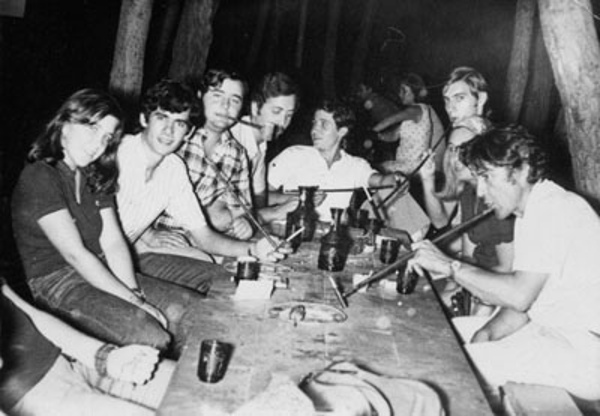
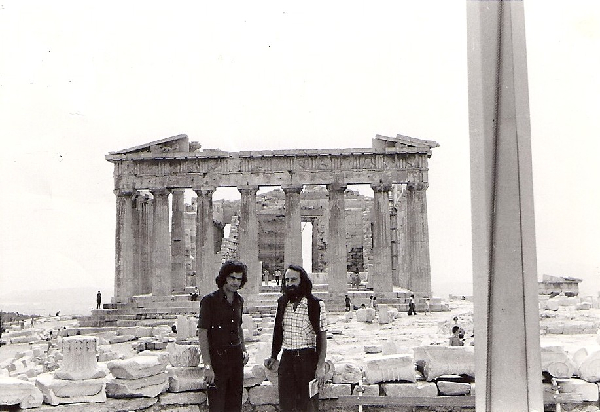
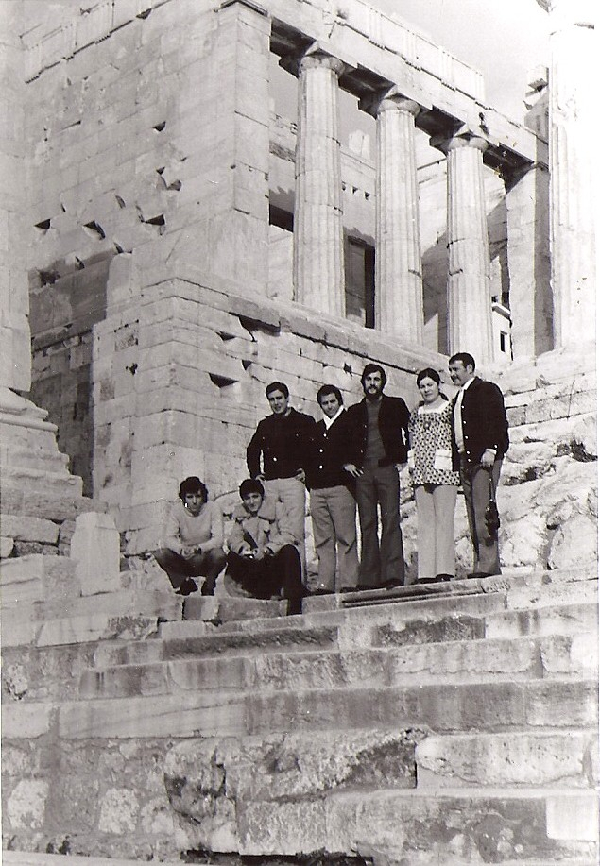
And not only onboard, but also ashore, as at Pireus (Greece). It was Daphne's Festival, on August 1973, and can be seen Lola, Xavier Brugarolas, Faustino Bodelón, not identified, Curro, not identified, Mimí and Emilio Clemares.
Elcano ordered at the same time a sister ship, as motor school-ship, but built in Cádiz instead Cartagena. She was called Alonso de Ojeda and was chartered for some time to Marasia.
Her propulsion was 4 diesel engines, with 8 cylinders each and 450 mm bore x 900 mm stroke, geared to two shafts delivering 8,000 HP, getting 18.6 knots in sea trials. Her bunker capacity was 711 MT.
To carry out properly her role as School Vessels they had many Officers, who had a double work, as normal complement and teachers.
On Deck there were: Master, Chief Officer, Second Officer and three Third Officers. In Engine: Chief Engineer, First Engineer and six Second Engineers. There were also Radio Officer, Doctor, Chaplain, Male Nurse and 33 more (Petty Officers and Crew).
The Master and Chief Engineer were at same time the School's Director and Subdirector, and the Chief Mate and First Engineer the studies chiefs of their respective area.
Each vessel had capacity for 24 Cadets, 12 Deck and 12 Engine. In each speciality there were two groups of six, and whilst a group was in academic works the other carried out training. For the academic work there were two classrooms, one for each especiality. There were also a extra chart room and an extra workshop for training. The Cadets had two berth cabins, and a messroom and a dayroom for their exclusive use.