Antartico
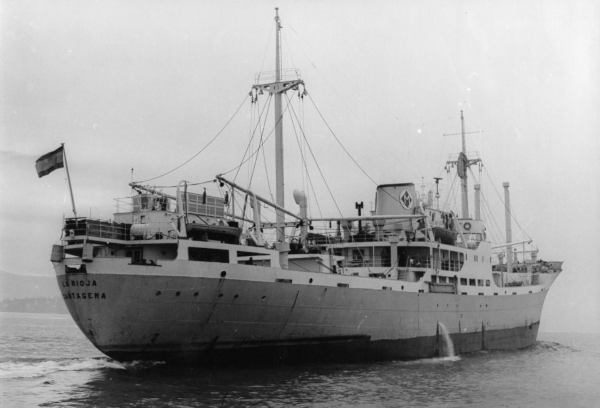
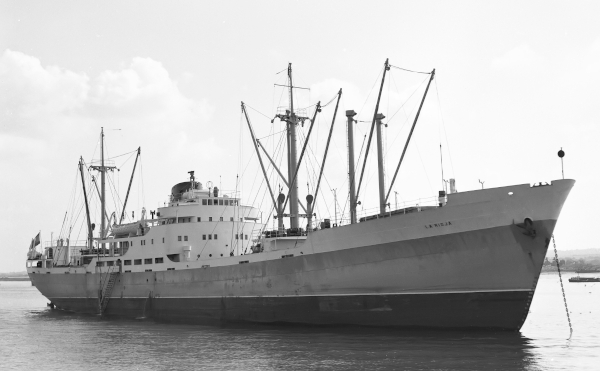
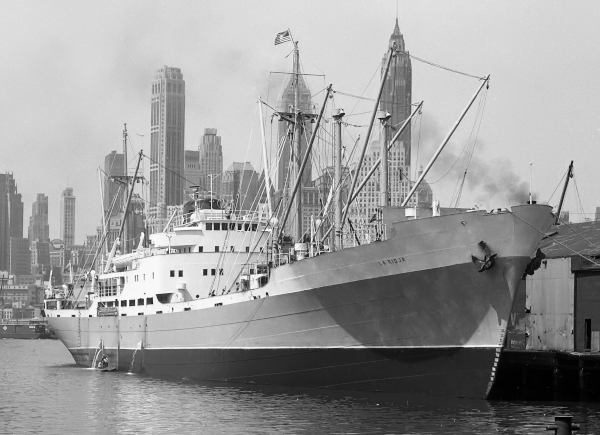
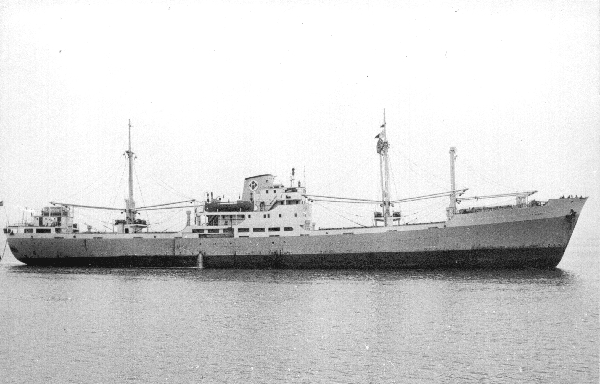
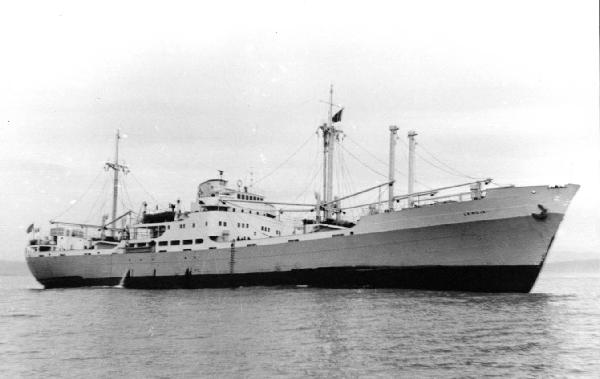
This ship was built on 1953 by Empresa Nacional Bazán, in Cartagena, as La Rioja for Empresa Nacional Elcano, together with her sister ship La Mancha. In this photo her name was yet La Rioja and her home port Cartagena.
All her data consolidated by J.J. Alcaraz
When on 1964 was bought by Marasia she kept the name till 1976, when was renamed Antartico, with homeport Barcelona.
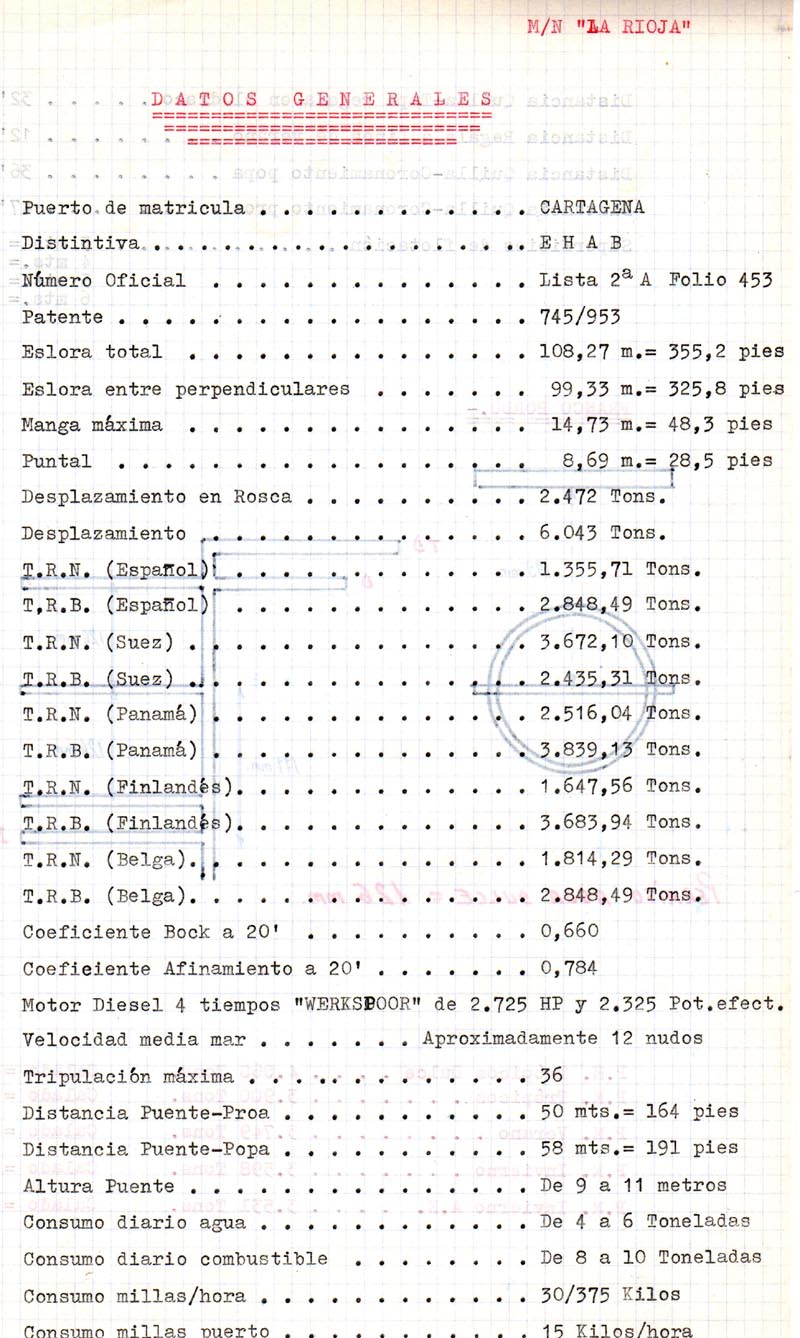
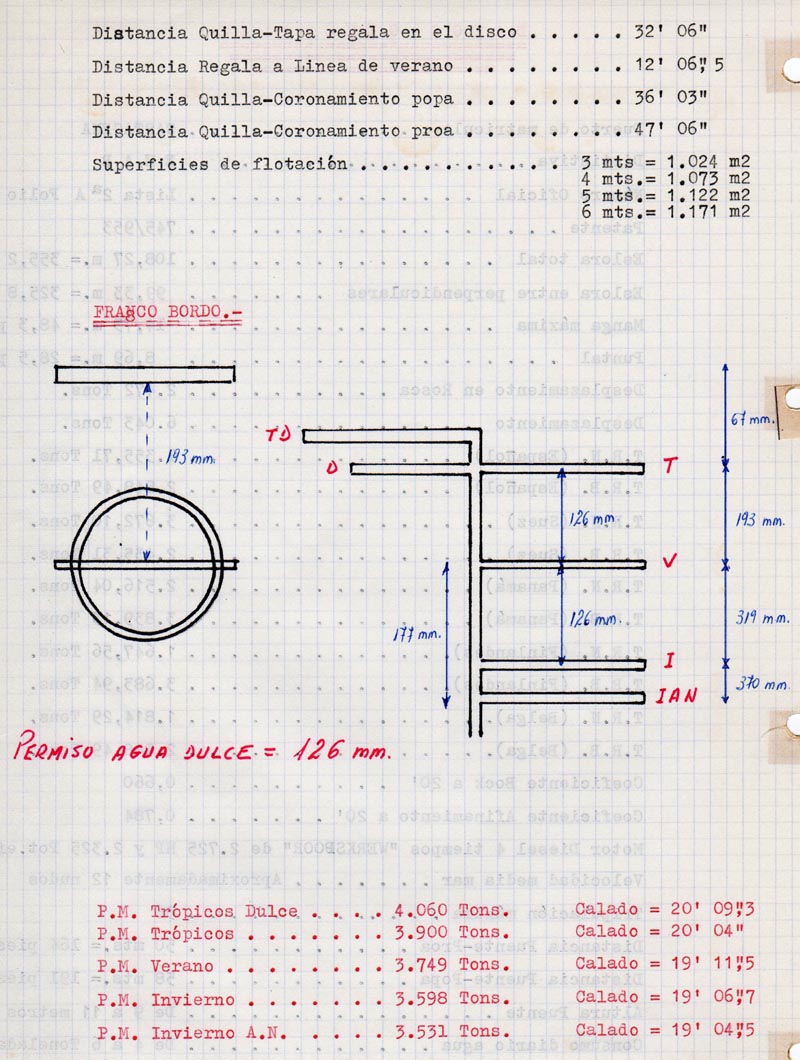
Her main specifications were:
Length 108.27 mtr Beam 14.75 mtr Depth 9.1 mtr Draft 6.24 mtr
1,356 NRT 2,848 GRT 6,125 MT Displacement 3,530 MT Load 3,809 DWT
Propulsion: Diesel engine Werkspoor - 2,325 HP - 6 Cylinders x 600 mm bore x 1,100 mm stroke
Consumption: 10 MT/day gasoil
3 Auxiliary engines - 200 KW - 220 VDC
Bunker capacity: 330 MT
Speed: 13.5 knots
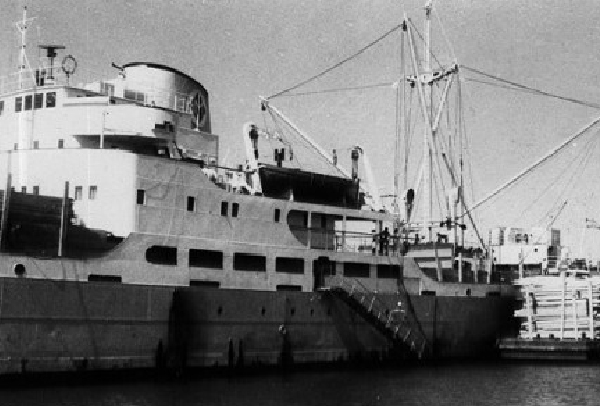
A closer view of the accomodation,
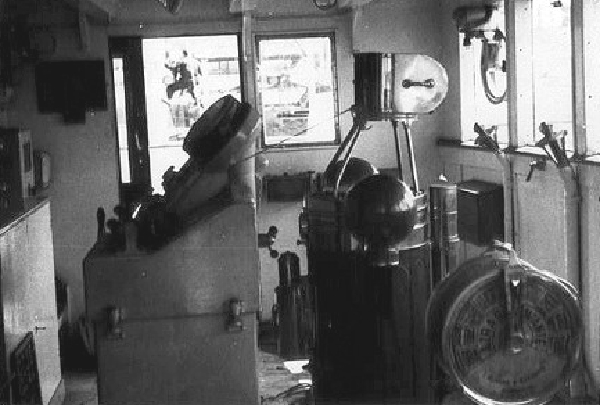
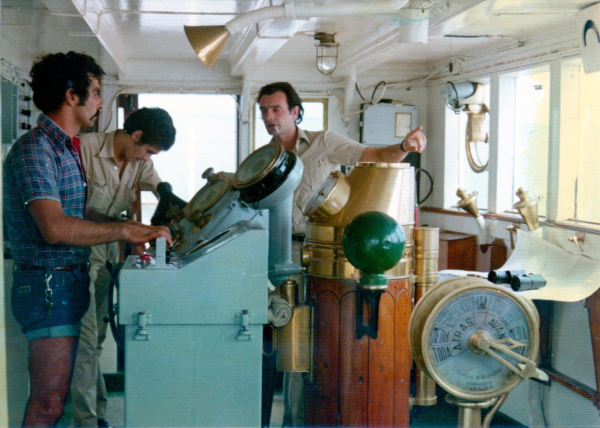
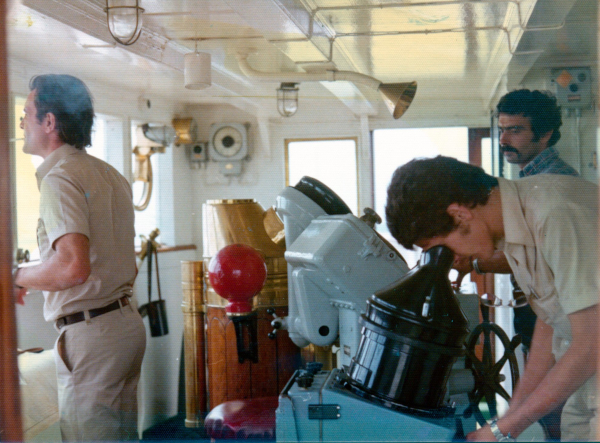
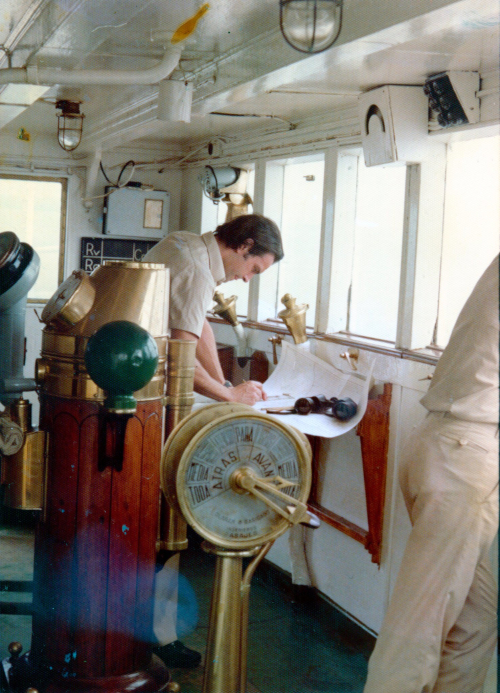
the bridge with old equipment from the early 50's
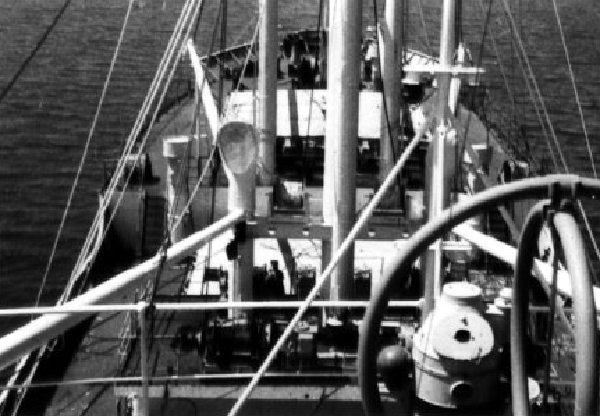
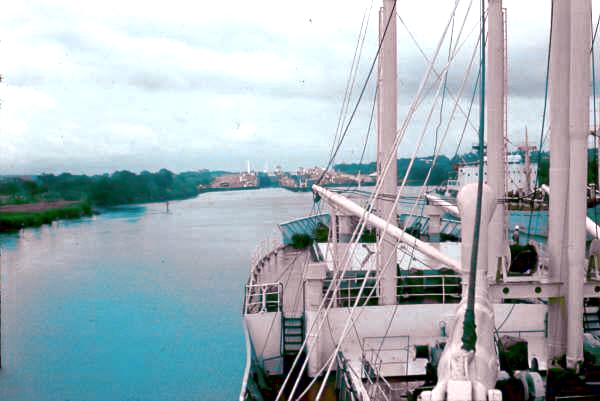
and the view from the bridge, but taken from the monkey island
During her many years with Marasia she was first trading to India/Pakistan/Bangladesh, loading mainly jute, but later was sailing in the regular lines. She carried out countless voyages to Africa, and many to South America West Coast.
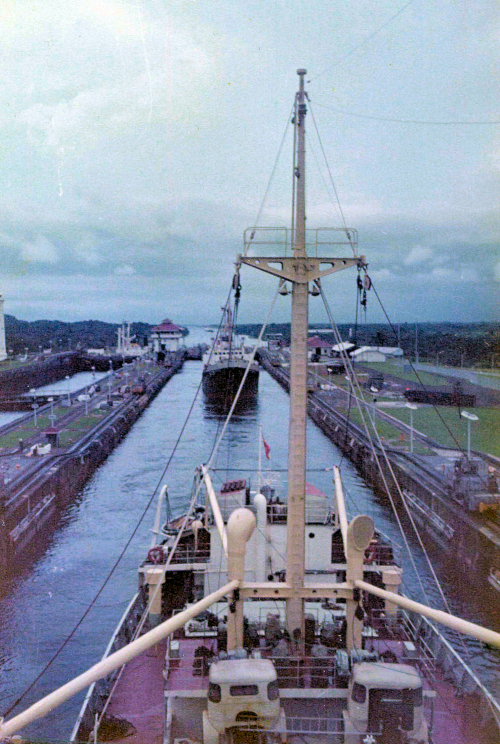
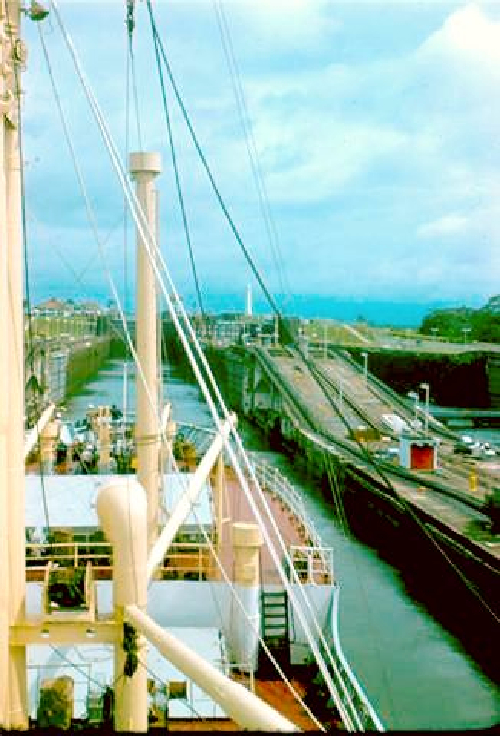
The last to America was on 1978, and was the previous to the last one before being scrapped. On this photo, shot on 1973, is passing the Panamá Canal bound to the Pacific, what can be deducted because there were trucks in her load. Her small size allowed her to be together with other ship in the locks, as can be seen in this case.
These two photos were in other voyage in 1975
The Bridge was very simple, with the minimum equipment for those years. Can be seen the steering wheel, the compass case, the telegraph, and the acustic tubes to talk to the Engine or the Master.
On them are Añaterve Sánchez (Master), Xavier Brugarolas (Second Mate) checking the radar, and the A/B.
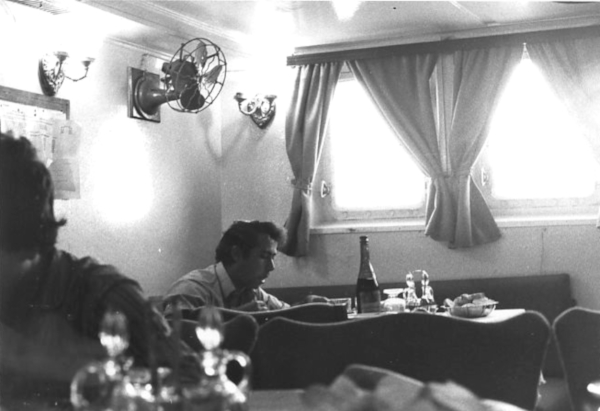
The Officers Mess Room had seats where in tropic areas was very hot, due not air condition on the ship. There were only some fans on the bulkheads, as can be seen on the next photo.
And many windows for trying to ventilate the vessel, that in port ought be with mosquito nettings, what combined with the lack of wind in port made the ship very hot.
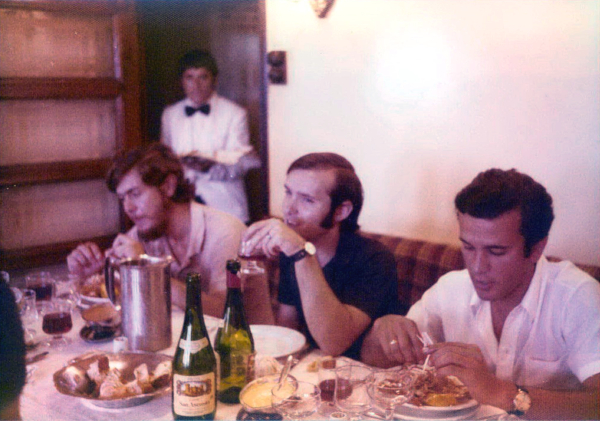
On this it seems not too hot, because the windows were closed. And might be the lunch before the watch 1200-1600, because only the Second Mate, Miguel Villarejo, and other person were eating.
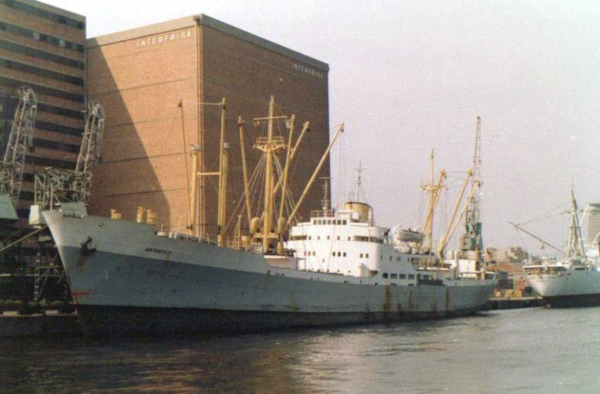
In this photo she is in Barcelona, at Muelle de San Beltrán. On the stern was the Cabo Santa Marta of Ybarra.
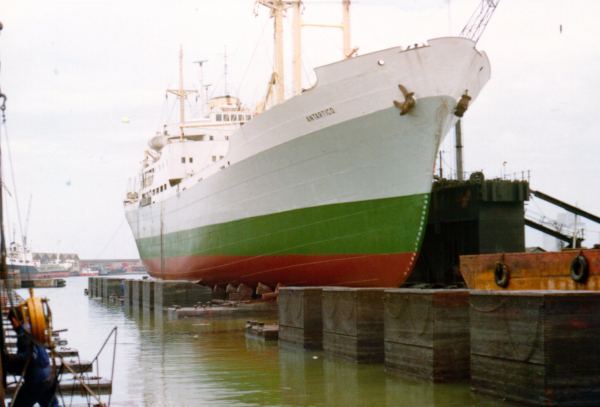
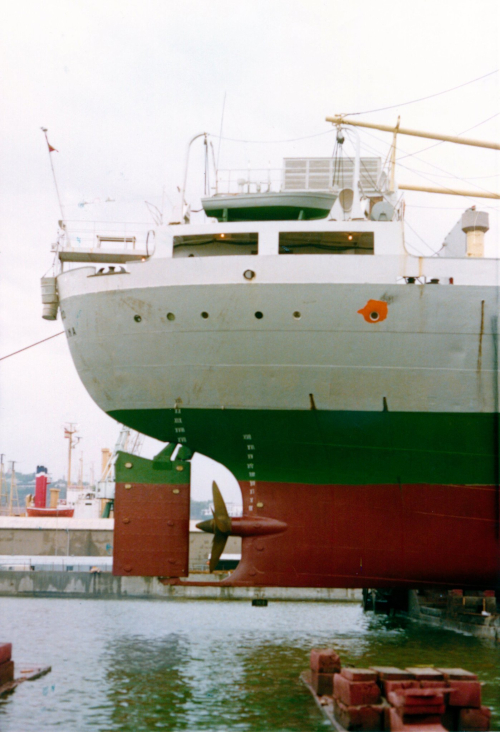
In this drydock the vessel was like a model. But the drydock was very short and all the poop was hanging in the air. The stern tube was old style, with the shaft turning on guayacan wood, and packing to avoid the sea water inlet.
Her last trip started at Huelva (Spain) on 9th March 1979 bound to Avilés (Spain) and the scrapyard. On 26 May 1979 started the scrap work at the facility of Desguaces y Salvamentos in San Juan de Nieva.
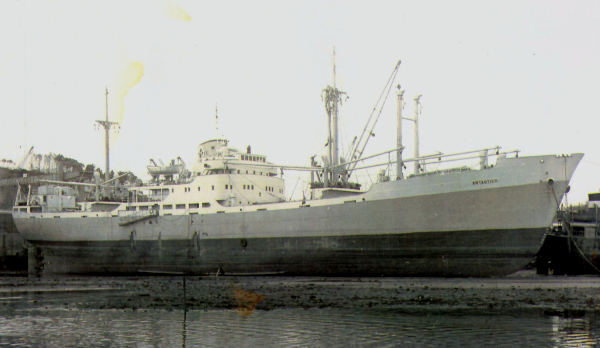
This photo shows her there, high and dry, ready to be scrapped.
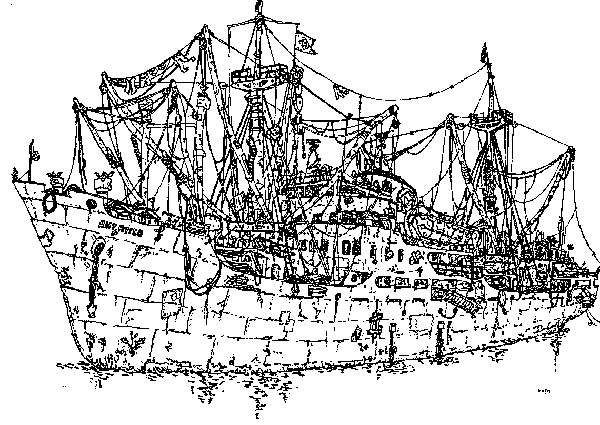
This sketch, drawn by J.A. Egea, is an exaggerated but nice caricature of the ship. His arm is hanging from his cabin's window.
The caricature was for several years in the Officers Day Room.