Emporda


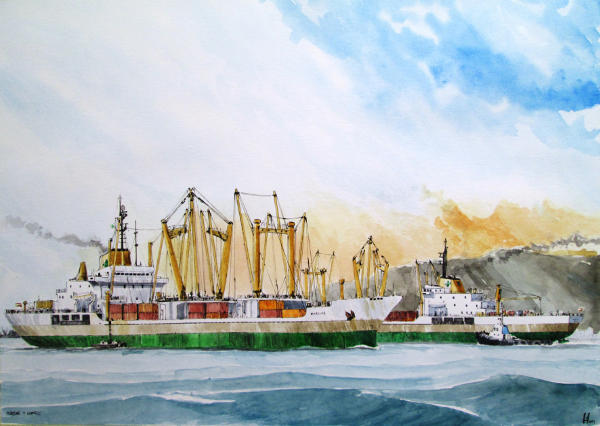
Emporda by J.M. Blanquez
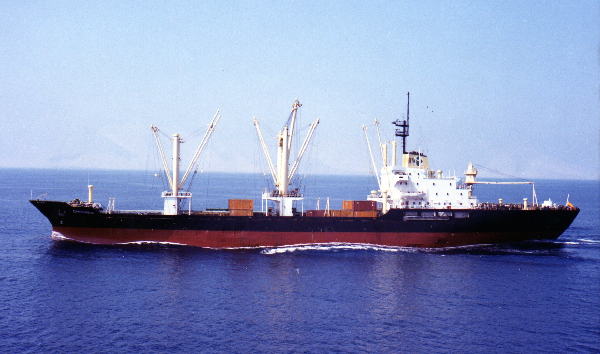
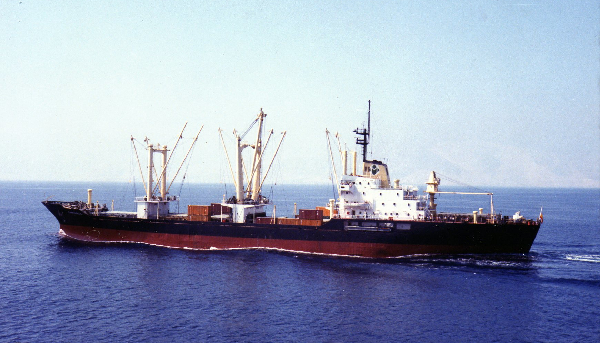
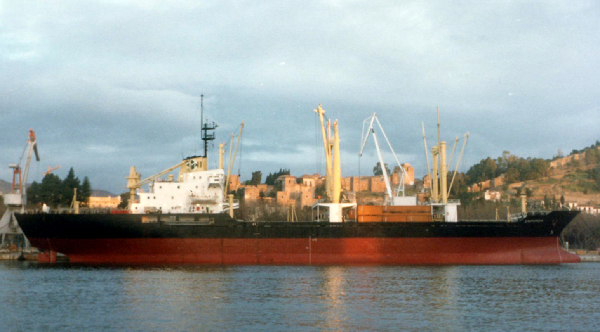
She was built in Astilleros Españoles at Sevilla with the numer 212, following her sister ship "Maresme", and was delivered to Marasia on 8 January 1979.
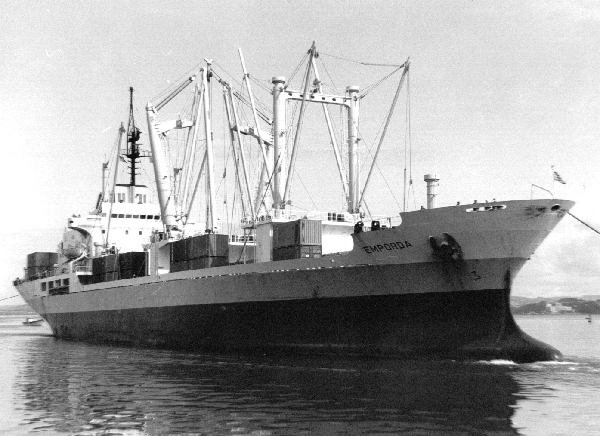
Por A. Assiego
Her hull was grey and green, Marasia's traditional colours, but few years later was changed to black and red. This photo was shot at Málaga on 9 January 1984.

Photo library of  M. Rodríguez Aguilar


Emporda by A. Mantilla
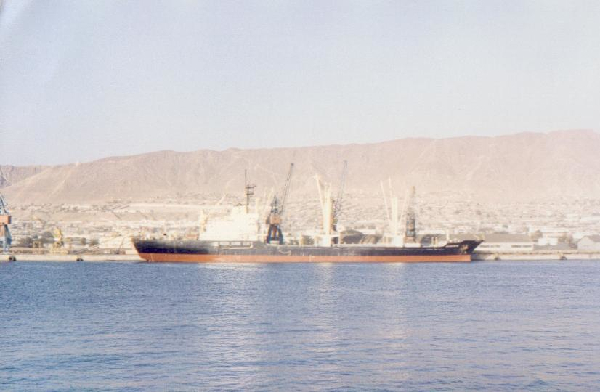
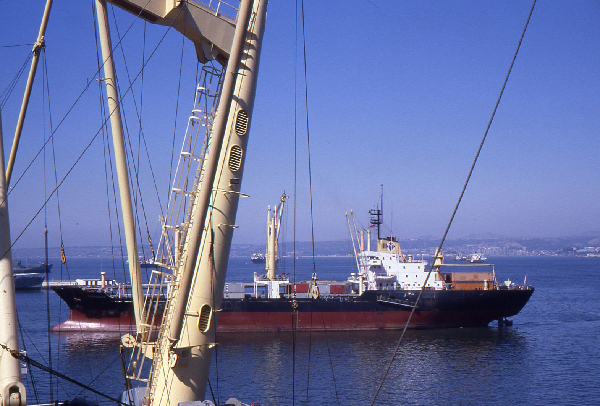
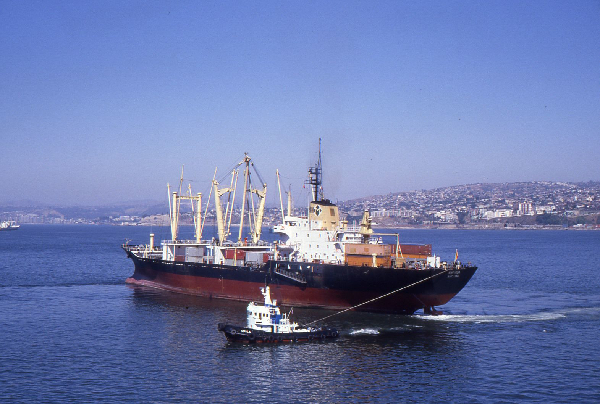
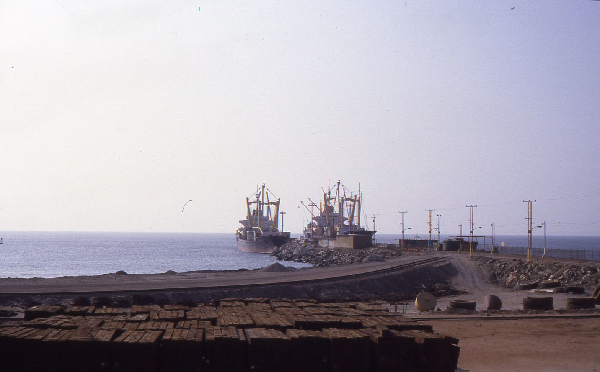
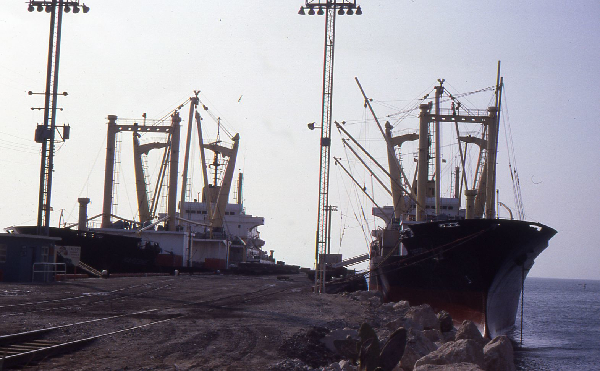
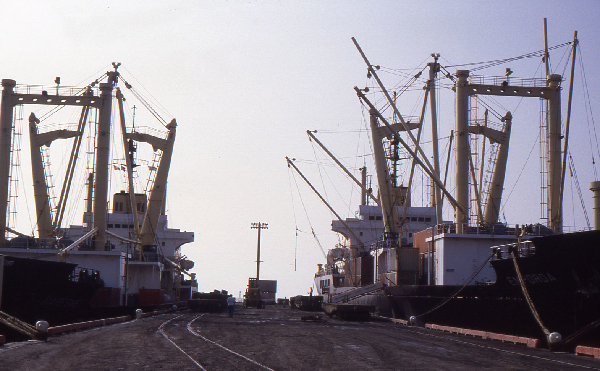
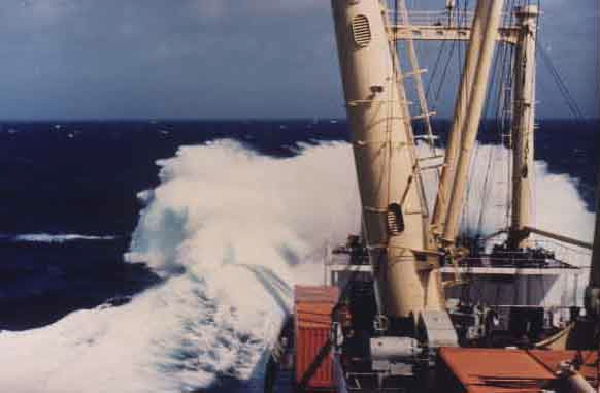
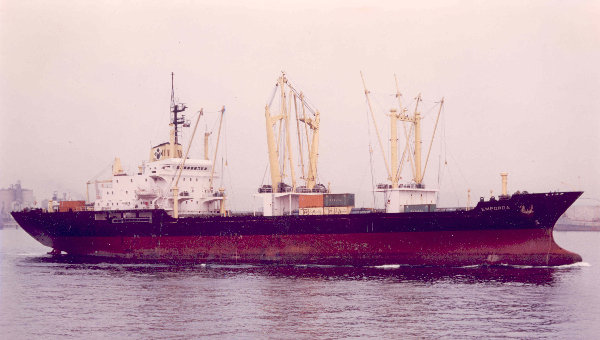
On this and next photos we can see the "Emporda" rolling when coming in to Antofagasta (Chile).
Due to the swell, which is usual for some months, and that to get into the port is needed to take it from the side, is normal the heavy rolling until getting protection from the breakwater.
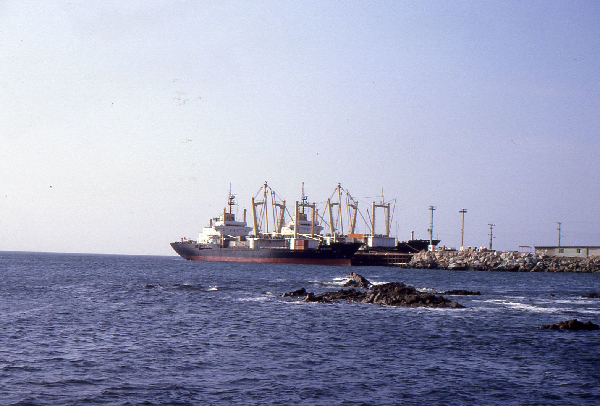
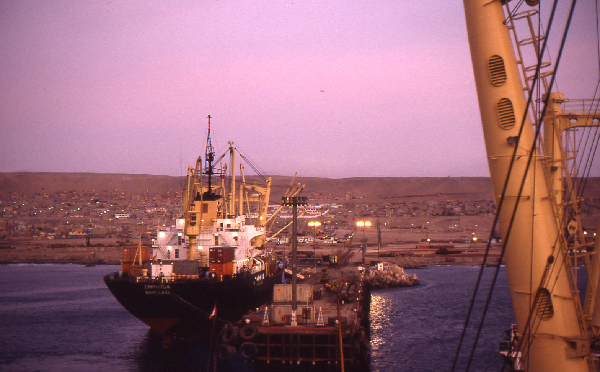
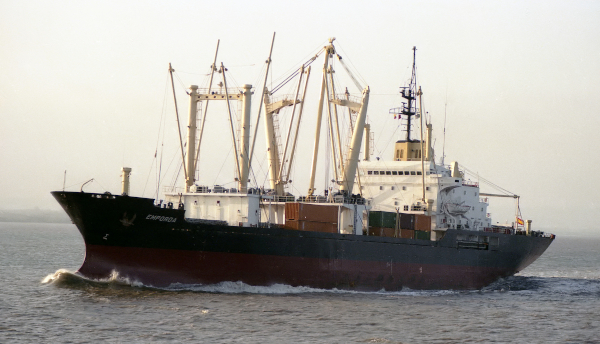
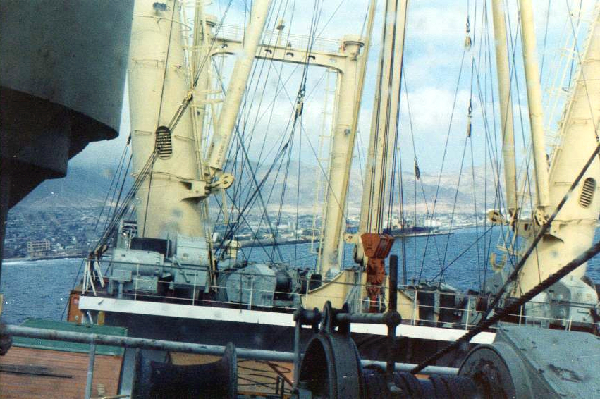
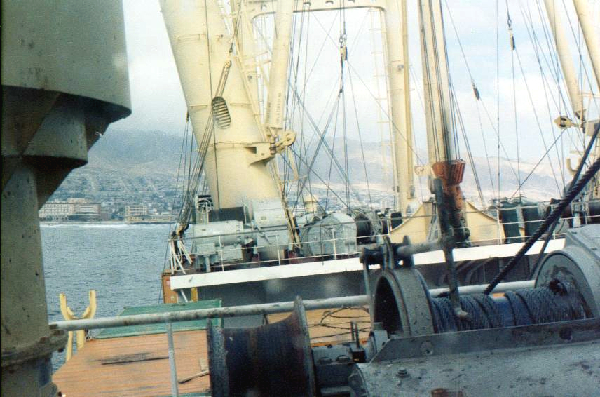
On the third photo, shot from the breakwater, the "Emporda" is berthed at Antofagasta with the town in the background, but the downtown is just to the left.

Emporda by A. Mantilla
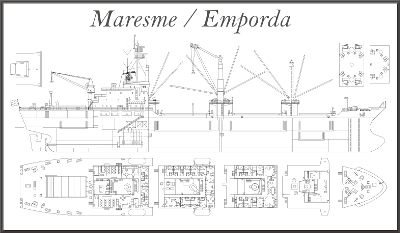
Her main specifications were:
Length 147.43 mtr      Beam 22.84 mtr      Depth 13.52 mtr
Upper draft 10.2mtr     Lower draft 8.2 mtr
6,592 NRT       10,964 GRT      16,000 DWT
Propulsion: Diesel engine Sulzer 6RND68 - 9,900 HP - 6 Cylinders - 680 mm bore
Sea trial speed: 17.25 knots

Emporda by A. Mantilla
Reinforced for heavy cargo     4 holds     6 tweendecks     4 hatchways
Cargo capacity:       21,370 cubic meters grain
                                   19,651 cubic meters bale     
                                        298 teus (186 in holds and 121 on deck)
                                        570 cubic meters reefer cargo
                                        558 cubic meters liquid cargo
Loading devices:       1 Stulken derrick of 75 MT for holds 2 and 3
                                   10 derricks of 5 MT for holds 1, 2 y 3
                                     1 crane of 5 MT for hold 4

Yacu Runa by O. Iturriaga
During all her life in Marasia she was in the line from Italy, France, Spain and Portugal to the South America West Coast, except one trip to Africa and other to Nicaragua and scattered calls in another ports, as Puerto Plata (Dominican Republic) or Mersin (Turkey).
When on 1987 summer was seized by the Banco de Crédito Industrial she was several months at San Carlos de la Rápita (Spain), and on November the Sociedad de Gestión de Buques took over her.
For a few months she sailed under SGB management until she was undersold to Lexmar International on August 1988.

Yacu Runa by O. Iturriaga
Then was renamed "Lux Harrier", and flagged in Vanautu. After she had many names, unlike her sister ship "Maresme".
On February 1989 chnaged her name to "Spire" (Vanautu), and on Noviembre same year to "Perla" (Vanautu).
On December 1990 changed to "Perla One", and this time also the flag to Cyprus.
On 2 September 1994 changed the flag to Malta, on 3rd to Cyprus again, and on 4rd to Malta.
On March 1995 changed again her name, this time to "Cosmos", flagged in Cyprus.

Yacu Runa by O. Iturriaga
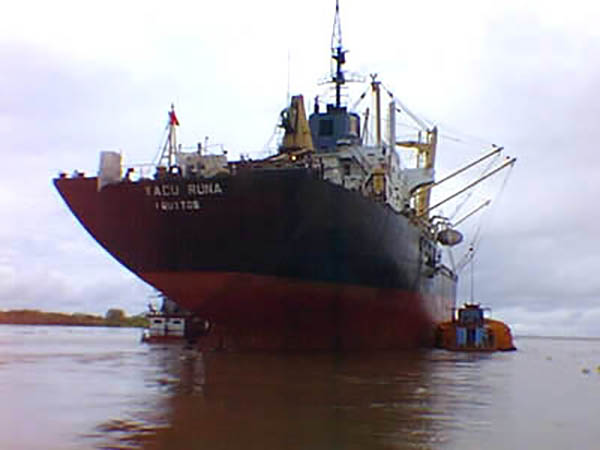
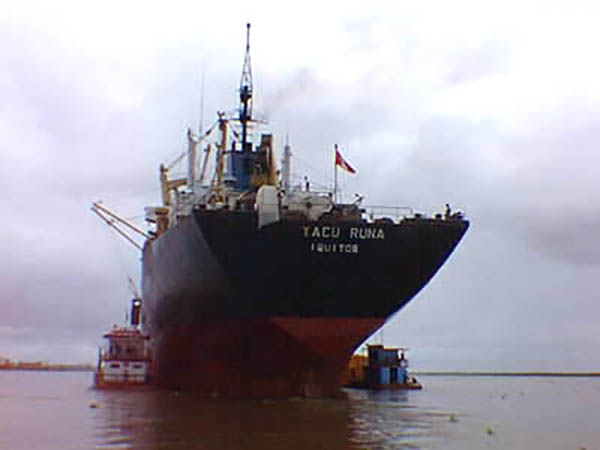
On April 1996 was bought by Peruvian owners and renamed "Yacu Runa", flagged in Bahamas, and on 1 January 1997 changed her flag to Perú, without changing name.
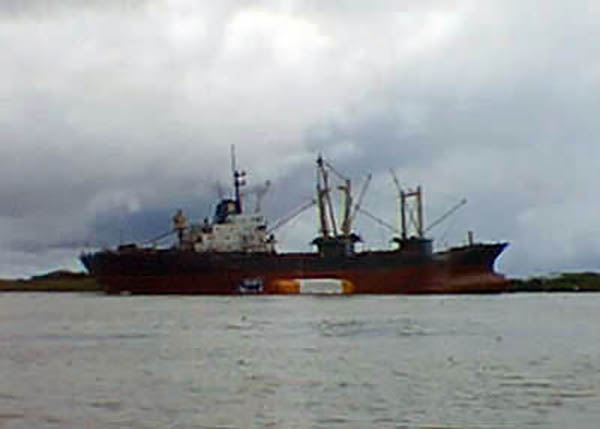
The two previous photos show her as "Yacu Runa", anchored at Iquitos (Perú) loading and discharging.
She has been in the line between Iquitos and United States, sailing up and down the Amazon River for almost two weeks to reach this Peruvian port situated almost in the Pacific coast.

Yacu Runa by O. Iturriaga
She has also often called in the Peruvian ports in the Pacific coast, which were visited every three months in her Marasia's time.
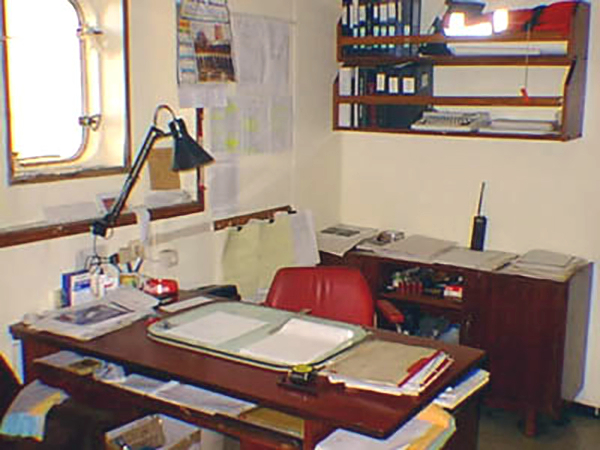
On this photo, shot the same day at Iquitos, is shown what was my office when I was sailing on this ship, without big changes from that time.

Yacu Runa by O. Iturriaga
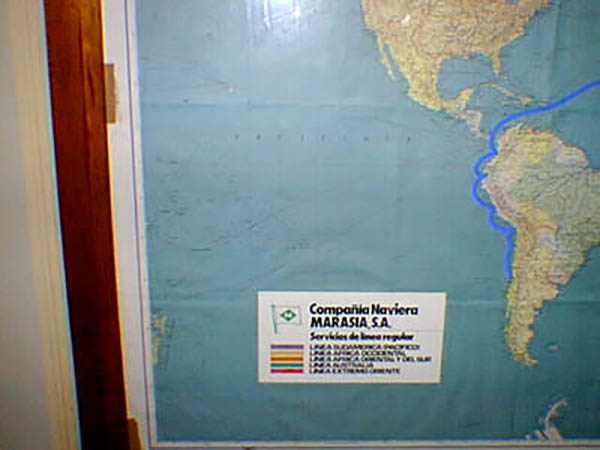
The map showing the Marasia's lines was yet in one of the office's walls.
On 2001 was flagged in Panamá and changed her name to "Huaylas", but her owners were also Peruvian. On 2003 was sold for scrapping in China.


Back to Maresme  Back to Index  Go to Chartered vessels

AM © 2002-2008